Why Disinfect ?

As a stable owner, you are responsible for ensuring the health and safety of the horses in your care and for preventing any risk of disease transmission at the source. Managing indoor air quality is also very important to help prevent respiratory problems.

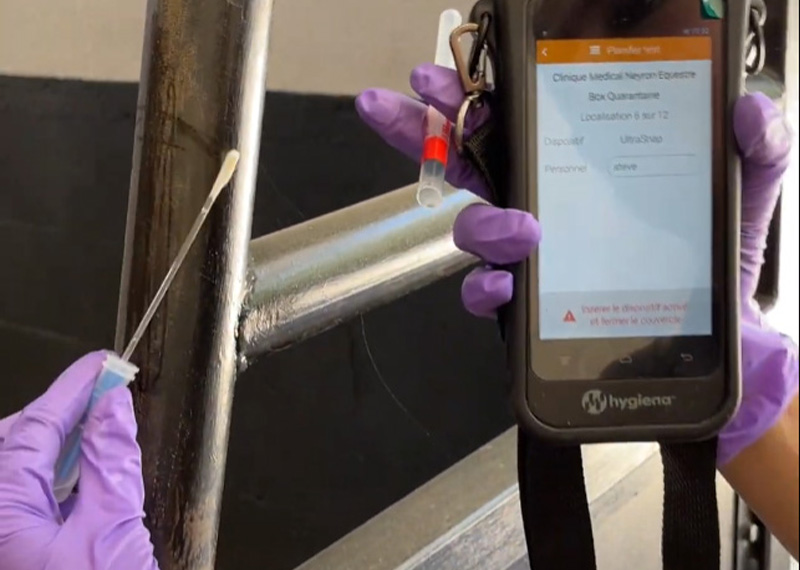
Stable managers face several challenges when it comes to disinfecting their facilities. Here are some of the most common issues:

  1. Selection of disinfectants: Finding effective disinfectants that are not harmful to horses, staff, or the environment can be difficult. Products must be effective against a wide range of pathogens and safe for use in areas where horses live and are fed.

  2. Disinfectant resistance: Frequent use of certain disinfectants can lead to the development of resistance in some microorganisms, making future disinfection less effective.

  3. Accessibility and cost: The costs associated with purchasing high-quality disinfectants and implementing a regular disinfection program can be high, especially for large facilities or those with limited budgets.

  4. Proper application: Ensuring that staff correctly apply disinfectants according to the manufacturer’s instructions is crucial for their effectiveness. This includes respecting required contact times to eliminate pathogens and using the correct concentrations.

  5. Waste management: Disinfection often generates waste that must be disposed of safely and in compliance with environmental regulations, which can present a logistical challenge.

  6. Awareness and training: Training staff on the importance of disinfection and correct procedures is essential, but can be difficult due to staff turnover or limited training resources.

  7. Hard-to-disinfect surfaces: Stables contain many porous (such as wood) or rough surfaces that are difficult to fully disinfect, leaving refuges for pathogens.

  8. Maintaining routine: Establishing and maintaining a strict disinfection routine can be challenging due to the intense daily activity and busy schedules in stables.

    These challenges require a careful and informed approach to ensure that disinfection is both effective and practical, while ensuring the safety and well-being of horses and people involved.

Air Disinfection

Although the main use of PhotoACTIVE Equine is long-term surface disinfection, its mechanism of action also involves the breakdown of VOCs (volatile organic compounds), which are atmospheric pollutants. When applied to large surfaces in enclosed spaces such as stables and transport vehicles, it can significantly reduce odors and chemical irritants affecting the respiratory system, such as ammonia vapors.

  1. Respiratory irritation: Ammonia can irritate horses’ airways, leading to inflammation and increasing the risk of chronic respiratory diseases.
  2. Reduced performance: Respiratory issues can affect exercise capacity and overall performance in horses.
  3. Effects on young horses: Foals and young horses are particularly sensitive to ammonia due to their developing respiratory systems.

Over time, these effects can impact quality of life and potentially reduce horses’ longevity. By reducing the presence of ammonia and other VOCs, PhotoACTIVE Equine not only contributes to a cleaner and more hygienic environment but also helps maintain equine respiratory health. This is especially important in equine settings where air quality directly affects the health and performance of animals.

How PhotoACTIVE Equine can help you ?

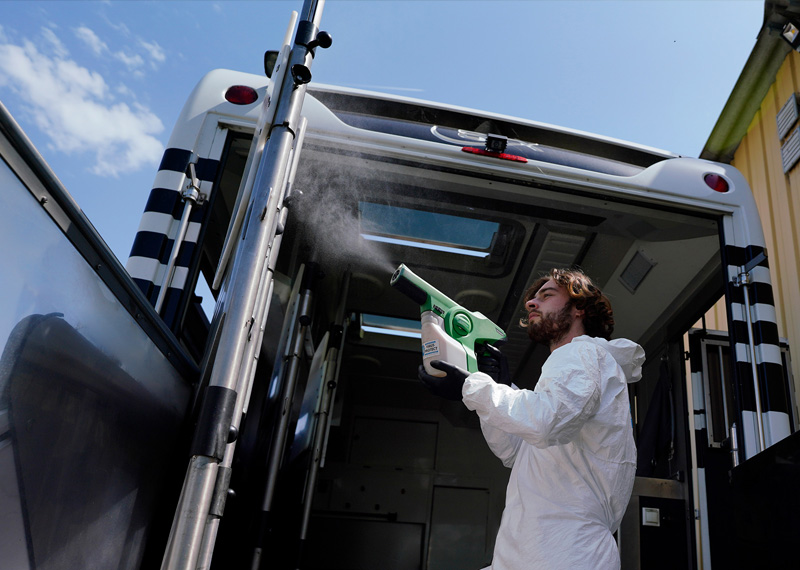
PhotoACTIVE Equine can significantly support professionals involved in equine transport by addressing several key challenges related to biosecurity and disease prevention. Here is how this innovative solution can be beneficial:

  1. Improved disinfection efficiency: The powerful antimicrobial properties of PhotoACTIVE Equine ensure thorough disinfection of transport vehicles and equipment, effectively eliminating bacteria, viruses, and fungi that can cause diseases in horses. Its ability to provide full surface coverage helps reduce the risk of cross-contamination between horses during transport.
  2. Long-lasting protection: Unlike conventional disinfectants that provide immediate but short-lived protection, PhotoACTIVE Equine creates a durable antimicrobial layer on surfaces. This long-lasting effect ensures that vehicles and equipment remain disinfected for extended periods, offering continuous protection against pathogens between transports.
  3. Reduced animal stress: By minimizing the risk of infection, PhotoACTIVE Equine contributes to a healthier transport environment, thereby reducing stress associated with illness in horses during transit. Lower stress levels can help maintain immune function, making animals less susceptible to infections.
  4. Time and cost efficiency: The residual effectiveness of PhotoACTIVE Equine reduces the need for frequent reapplication, saving time and resources for transport professionals. This efficiency is particularly valuable during busy transport schedules, ensuring that disinfection protocols do not delay operations.
  5. Compliance with international regulations: The proven effectiveness and safety profile of PhotoACTIVE Equine can help transport companies comply with strict international biosecurity regulations. By using a product aligned with global health and safety standards, carriers can more easily meet regulatory requirements, facilitating international movement.
  6. Safety for horses and humans: Formulated to be safe for both animals and humans, PhotoACTIVE Equine ensures that the disinfection process does not expose horses or transport staff to harmful chemicals. This safety feature is essential for maintaining a healthy environment for everyone involved in the transport process.
  7. Environmental considerations: With a focus on environmental sustainability, PhotoACTIVE Equine offers a more eco-friendly approach to disinfection. By reducing the need for frequent applications and using safer chemical formulations, it minimizes the ecological impact of disinfection practices in transport settings.

In summary, PhotoACTIVE Equine provides a comprehensive solution to the disinfection challenges faced by equine transport professionals, improving biosecurity measures, ensuring animal welfare, and streamlining operational efficiency. Its use can significantly contribute to the overall success and reliability of horse transport services.

Do want to learn more?